studyfetch
studyfetch
an AI edtech platform designed to help students actually learn
Meet Collaboration Mode: One of the features we launched post redesign.
GOAL:
ROLE:
TEAM:
OUTCOME:
StudyFetch had a strong product, but fragmented design, a lack of cohesive brand identity, and a youthful visual tone created a perception gap, preventing the platform from resonating with the college and graduate students it was built for.
Designer (Product and Brand)
CEO, CMO, Creative Producer, Motion Designer (Animation), Me
Built design direction and the first design system in Figma
Redesigned the product experience that contributed to 30%+ DAU growth in 3 months
Launched a new collaborative feature with 22% adoption rate in the first month
Designed brand strategy and identity, introducing the new Creator Program
EXPLORATION
CONTEXT
CONTEXT
StudyFetch is an AI powered study platform that turns course materials into personalized learning tools. It's been recognized as a fast-growing edtech startup built to revolutionize learning, pushing toward an AI study companion, Spark.E.
When I joined StudyFetch, I was brought on as a Creative Designer with a clear assignment: build the design foundation for a product assembled by a rotation of Fiverr designers, and create something that finally felt cohesive. No design files existed. No shared components. Every screen was its own island.
But within my first weeks of working closely with the founders, they felt something was wrong but couldn't pinpoint it. We spent long sessions trying to name it. I realized visual inconsistency was only a part of the problem, it was actually a symptom of a brand that lacked identity.
What surfaced was a harder problem: StudyFetch didn't know what it was. We had a new objective:
define how StudyFetch is communicated, experienced, and perceived.
StudyFetch is an AI powered study platform that turns course materials into personalized learning tools. It's been recognized as a fast-growing edtech startup built to revolutionize learning, pushing toward an AI study companion, Spark.E.
When I joined StudyFetch, I was brought on as a Creative Designer with a clear assignment: build the design foundation for a product assembled by a rotation of Fiverr designers, and create something that finally felt cohesive. No design files existed. No shared components. Every screen was its own island.
But within my first weeks of working closely with the founders, they felt something was wrong but couldn't pinpoint it. We spent long sessions trying to name it. I realized visual inconsistency was only a part of the problem, it was actually a symptom of a brand that lacked identity.
What surfaced was a harder problem: StudyFetch didn't know what it was. We had a new objective:
define how StudyFetch is communicated, experienced, and perceived.
When I joined StudyFetch, I was brought on as a Creative Designer with a clear assignment: build the design foundation for a product assembled by a rotation of Fiverr designers, and create something that finally felt cohesive. No design files existed. No shared components. Every screen was its own island.
But within my first weeks of working closely with the founders, they felt something was wrong but couldn't pinpoint it. We spent long sessions trying to name it. I realized visual inconsistency was only the first problem, it was actually a symptom of a brand that lacked identity.
We had two new objectives:
define who StudyFetch is and how it fits into its users' life
define how StudyFetch is communicated, experienced, and perceived.
WHAT I FOUND
WHAT I FOUND
THE DIAGNOSIS
Through product exploration, internal conversations, and reviewing how students were experiecing the product, three core issues emerged.
001
001
001
VISUAL INCONSISTENCY AND LACK OF STRUCTURE
VISUAL INCONSISTENCY AND LACK OF STRUCTURE
We already knew the interface was visually crowded and inconsistent. Navigation patterns changed across flows, visual hierarchy was inconsistent, and important actions were difficult to scan quickly. Layouts, typography, spacing, and interaction patterns varied from screen to screen. The deeper disconnect was what the product communicated; instead of feeling calm and focused, the user felt overwhelmed and trying to find where their things existed.
For a study platform, this was a serious trust issue. A tool meant to help students succeed academically needs to feel clear, reliable, and credible. This confusion was also impacting revenue, onboarding conversion was struggling because the product didn't communicate trust.
Internally, without a design system or even design files, every screen was being reinvented, launches moved slowly, and miscommunication between teams was inevitable. A clear design system would help the engineering and design teams build more efficiently.
the entrance into each feature pre redesign;
this is where lack of consistency really felt chaotic
the slider was too crowded
some screens lacked a heading "Practice" is referring to Tests and Quizzes
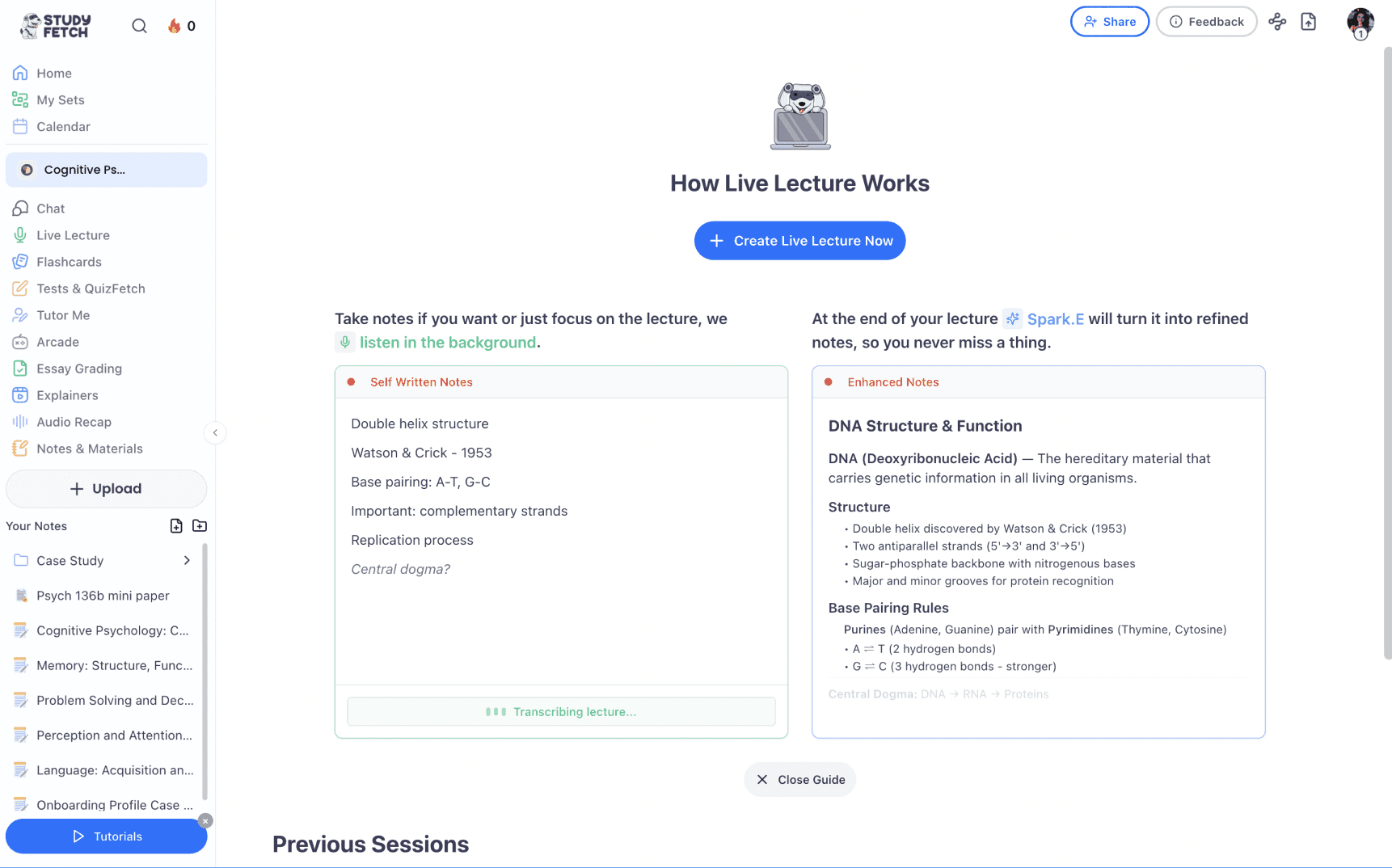
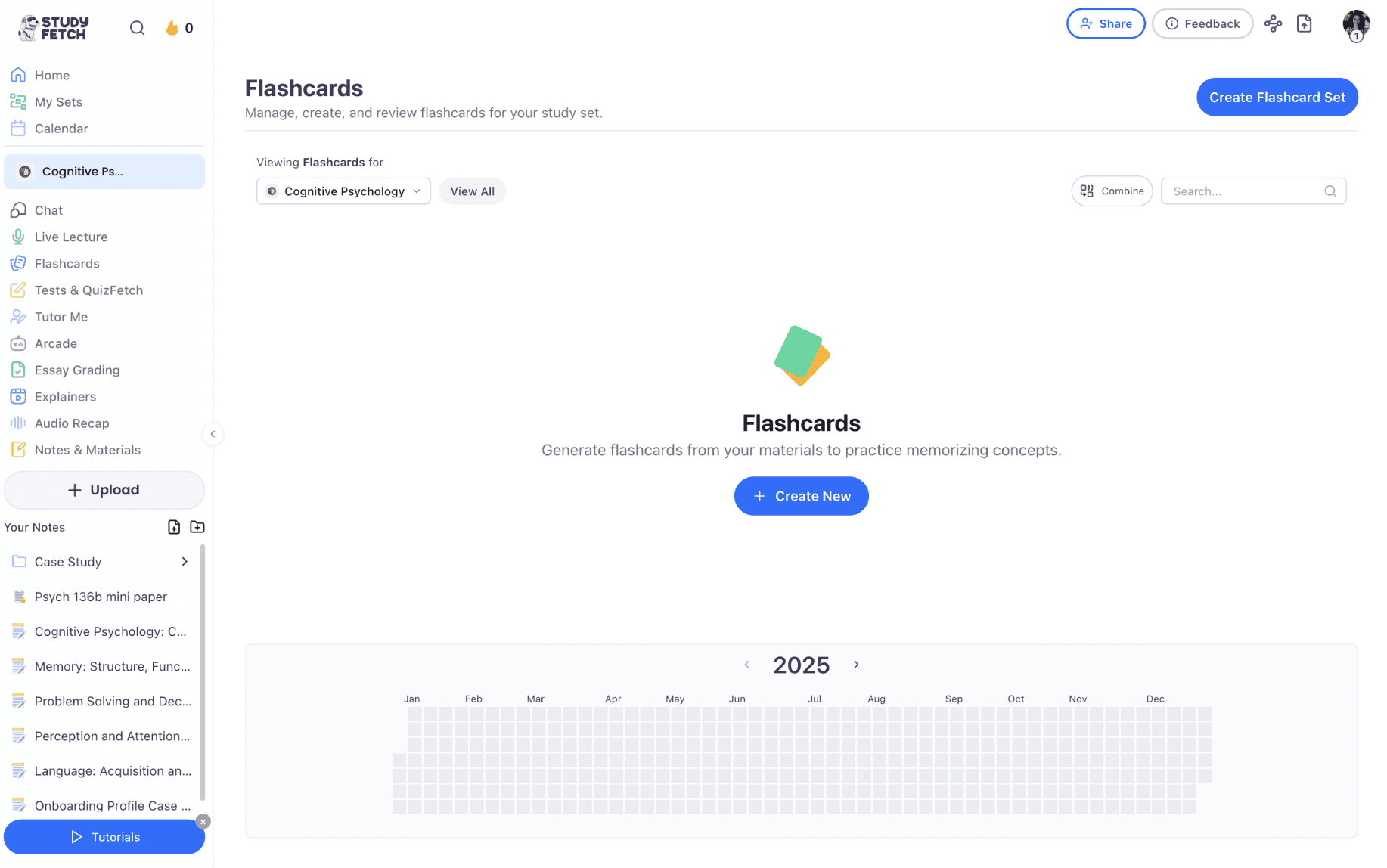
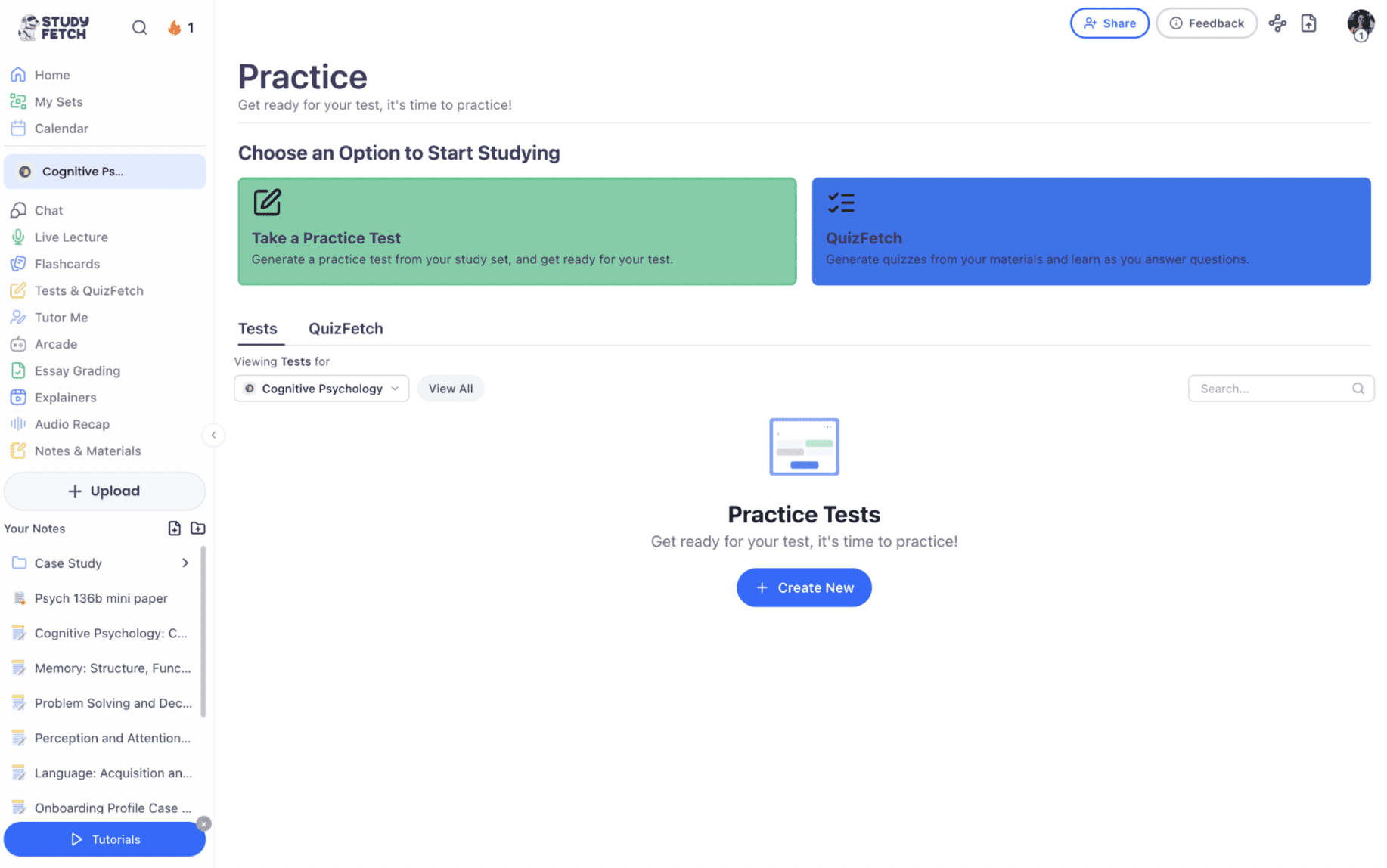
pre redesign visual direction:
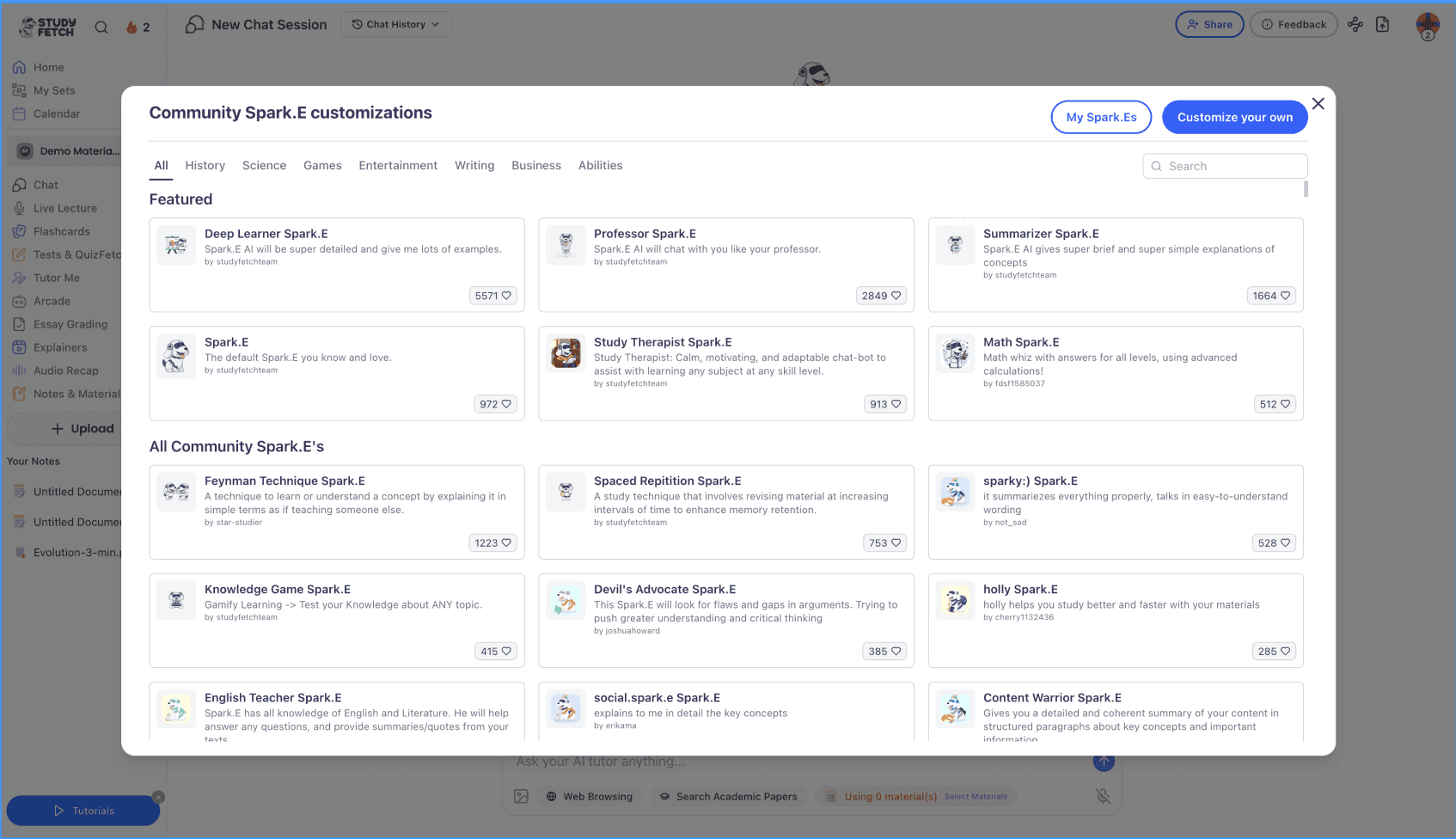
Spark.E (our AI mascot) Customization screen felt overwhelming and lacked polish
the current visual direction:
Spark.E (our AI mascot)
When I joined StudyFetch, I was brought on as a Creative Designer with a clear assignment: build the design foundation for a product assembled by a rotation of Fiverr designers, and create something that finally felt cohesive. No design files existed. No shared components. Every screen was its own island.
But within my first weeks of working closely with the founders, they felt something was wrong but couldn't pinpoint it. We spent long sessions trying to name it. I realized visual inconsistency was only the first problem, it was actually a symptom of a brand that lacked identity.
We had two new objectives:
define who StudyFetch is and how it fits into its users' life
define how StudyFetch is communicated, experienced, and perceived.
001
A PERCEPTION GAP WAS BLOCKING OUR TARGET AUDIENCE
StudyFetch was built for college and graduate students, including law and medical students.
But the product's visual tone and naming conventions signaled something very different.
Features like "QuizFetch" and the heavy mascot voice made the product feel closer to a middle‑school study tool than something a law student might trust before finals.
Ironically, students who did try the product loved it. The gamification and personality helped break the monotony of studying.
But many serious students never tried it in the first place.
They discovered StudyFetch through friends, not through the brand itself.
002
002
002
THERE WAS A PERCEPTION GAP
THERE WAS A PERCEPTION GAP
StudyFetch was built for college and graduate students, including law and medical students.
But the product's visual tone and naming conventions signaled something very different.
Features like "QuizFetch" and the heavy mascot voice made the product feel closer to an elementary-middle school user.
Through early research, I was surprised to find that gamification itself did resonate with the college user, the perception gap came from first impressions and the outdated design. The brand was subtly signaling "made for kids", but once they tried it, they loved it. The product excelled where the brand failed, this needed to be a huge focus. They discovered StudyFetch through friends, not through the brand itself.
StudyFetch was built for college and graduate students, including law and medical students.
But the product's visual tone and naming conventions signaled something very different.
Features like "QuizFetch" and the heavy mascot voice made the product feel closer to a middle‑school study tool than something a law student might trust before finals.
Through early research, I was surprised to find that gamification itself did resonate with the college user, the perception gap came from first impressions and the aged design. The brand was subtly signaling "made for kids", but once they tried it, they loved it. The product excelled where the brand failed, this needed to be a huge focus. They discovered StudyFetch through friends, not through the brand itself.
This meant two things: understanding the user and how StudyFetch fits into their world was key to building a product that lasts past the noise. Also, trusted friends (and creators) could drive
StudyFetch was built for college and graduate students, including law and medical students.
But the product's visual tone and naming conventions signaled something very different.
Features like "QuizFetch" and the heavy mascot voice made the product feel closer to a middle‑school study tool than something a law student might trust before finals.
Through early research, I was surprised to find that gamification itself did resonate with the college user, the perception gap came from first impressions and the aged design. The brand was subtly signaling "made for kids", but once they tried it, they loved it. The product excelled where the brand failed, this needed to be a huge focus. They discovered StudyFetch through friends, not through the brand itself.
This meant two things: understanding the user and how StudyFetch fits into their world was key to building a product that lasts past the noise. Also, trusted friends (and creators) could drive
This meant two things: understanding the user and how StudyFetch fits into their world was key to building a product that lasts past noise.
Building who StudyFetch is, who its user is, and how they align was the solution to closing the perception gap.
StudyFetch was built for college and graduate students, including law and medical students.
But the product's visual tone and naming conventions signaled something very different.
Features like "QuizFetch" and the heavy mascot voice made the product feel closer to a middle‑school study tool than something a law student might trust before finals.
Through early research, I was surprised to find that gamification itself did resonate with the college user, the perception gap came from first impressions and the aged design. The brand was subtly signaling "made for kids", but once they tried it, they loved it. The product excelled where the brand failed, this needed to be a huge focus. They discovered StudyFetch through friends, not through the brand itself.
This meant two things: understanding the user and how StudyFetch fits into their world was key to building a product that lasts past the noise. Also, trusted friends (and creators) could drive
StudyFetch was built for college and graduate students, including law and medical students.
But the product's visual tone and naming conventions signaled something very different.
Features like "QuizFetch" and the heavy mascot voice made the product feel closer to a middle‑school study tool than something a law student might trust before finals.
Through early research, I was surprised to find that gamification itself did resonate with the college user, the perception gap came from first impressions and the aged design. The brand was subtly signaling "made for kids", but once they tried it, they loved it. The product excelled where the brand failed, this needed to be a huge focus. They discovered StudyFetch through friends, not through the brand itself.
This meant two things: understanding the user and how StudyFetch fits into their world was key to building a product that lasts past the noise. Also, trusted friends (and creators) could drive
pre redesign visual identity:
A screen grab of our Home Screen
When I joined StudyFetch, I was brought on as a Creative Designer with a clear assignment: build the design foundation for a product assembled by a rotation of Fiverr designers, and create something that finally felt cohesive. No design files existed. No shared components. Every screen was its own island.
But within my first weeks of working closely with the founders, they felt something was wrong but couldn't pinpoint it. We spent long sessions trying to name it. I realized visual inconsistency was only the first problem, it was actually a symptom of a brand that lacked identity.
We had two new objectives:
define who StudyFetch is and how it fits into its users' life
define how StudyFetch is communicated, experienced, and perceived.
003
003
003
BUNDLE OF TOOLS
BUNDLE OF TOOLS
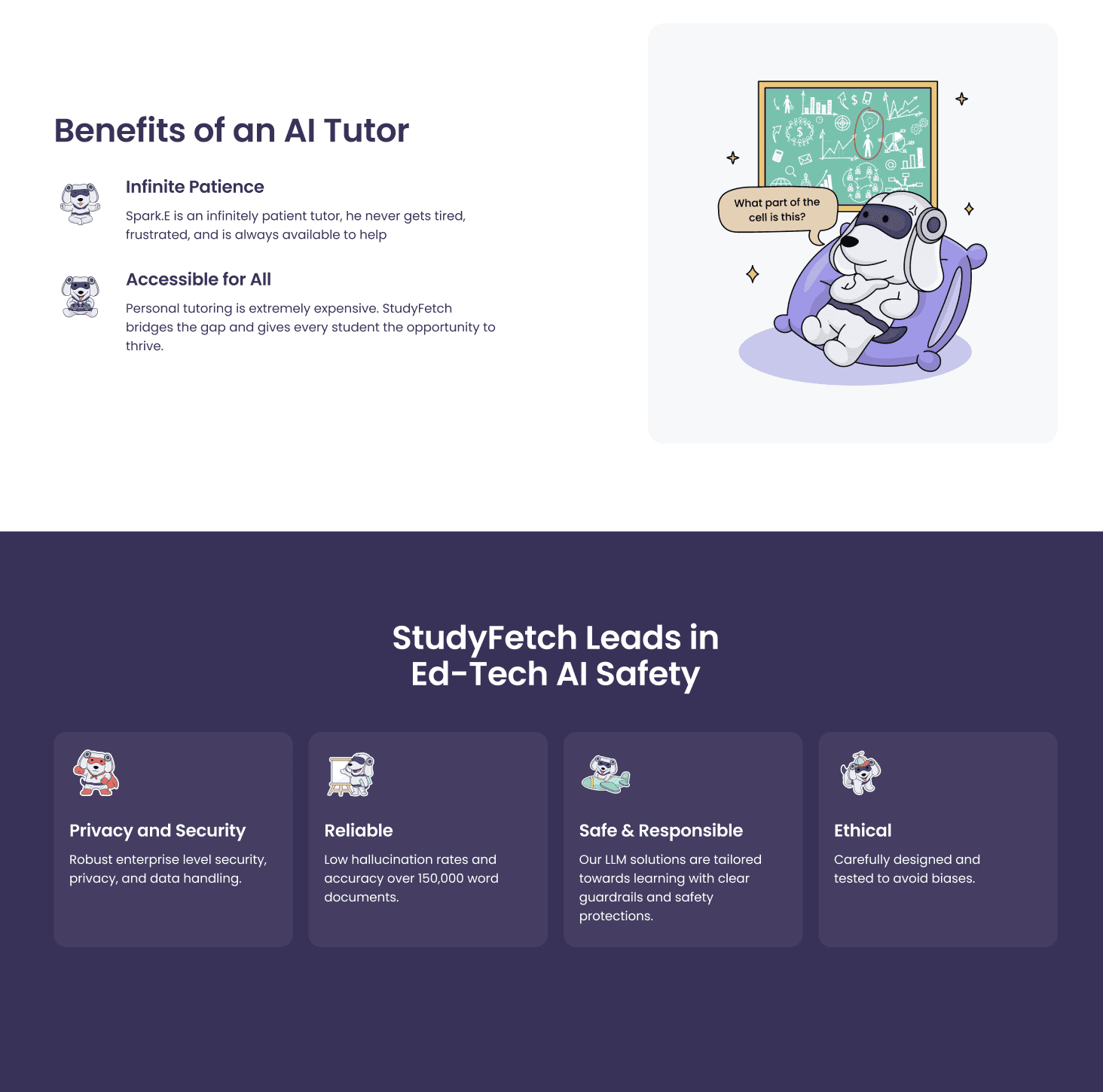
Even though the underlying features were strong. Flashcards, quizzes, note generation, tutoring tools, games, audio recaps, and so on; separately powerful, but easy to get lost.
Students weren’t moving through a clear learning environment. Instead, StudyFetch looked like a collection of separate utilities you could experiment with.
But the founders had built StudyFetch around a much stronger mission: helping students actually learn their material, and have the tools they need to immerse themselves in learning. The product experience just needed to communicate that mission.
DESIGN DIRECTION
RESEARCH INSIGHT & STRATEGY
RESEARCH INSIGHT & STRATEGY
Before redesigning the product, I had to really understand our user and where StudyFetch can actually make a difference in their lives.
The competitive landscape in edtech is shifting rapidly. Every edtech platform is competing to be "the one". New AI tools are launching constantly, and major players like Google's NotebookLM already had massive distribution and free access.
Competing purely on features was unrealistic. StudyFetch needed something stronger than another AI study tool.
I needed to build an identity students could connect with.
Through these conversations with the steakholders, along with reviewing student behavior and how the product was being discovered, I began to notice a clear emotional pattern in how students talked about school.
Students felt alone and trapped in a constant race for efficiency and output. They felt like they just had to produce, and rarely felt like they were truly learning. I proposed reframing StudyFetch as the place where students actually learn so they have the time for real life. A platform that feels supportive, focused, and credible in the middle of a lonely, high pressure experience.
This meant meeting students where they are. I explored two paths we can take:
Before redesigning the product, I had to really understand our user and where StudyFetch can actually make a difference in their lives.
The competitive landscape in edtech is shifting rapidly. Every edtech platform is competing to be "the one". New AI tools are launching constantly, and major players like Google's NotebookLM already had massive distribution and free access.
Competing purely on features was unrealistic. StudyFetch needed something stronger than another AI study tool.
I needed to build an identity students could connect with.
Through these conversations with the steakholders, along with reviewing student behavior and how the product was being discovered, I began to notice a clear emotional pattern in how students talked about school.
Students felt alone and trapped in a constant race for efficiency and output. They felt like they just had to produce, and rarely felt like they were truly learning. I proposed reframing StudyFetch as the place where students actually learn so they have the time for real life. A platform that feels supportive, focused, and credible in the middle of a lonely, high pressure experience.
This meant meeting students where they are. I explored two paths we can take:
When I joined StudyFetch, I was brought on as a Creative Designer with a clear assignment: build the design foundation for a product assembled by a rotation of Fiverr designers, and create something that finally felt cohesive. No design files existed. No shared components. Every screen was its own island.
But within my first weeks of working closely with the founders, they felt something was wrong but couldn't pinpoint it. We spent long sessions trying to name it. I realized visual inconsistency was only the first problem, it was actually a symptom of a brand that lacked identity.
We had two new objectives:
define who StudyFetch is and how it fits into its users' life
define how StudyFetch is communicated, experienced, and perceived.

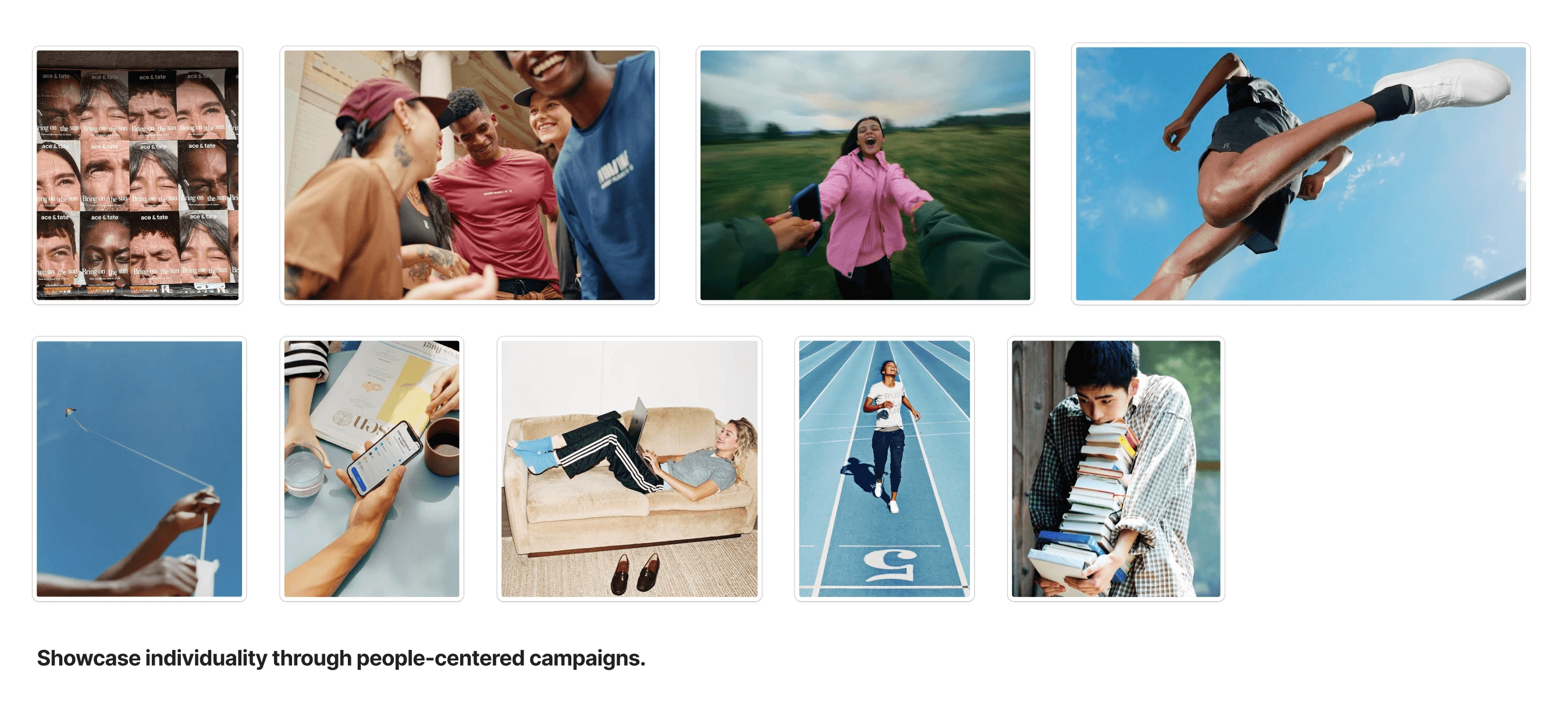
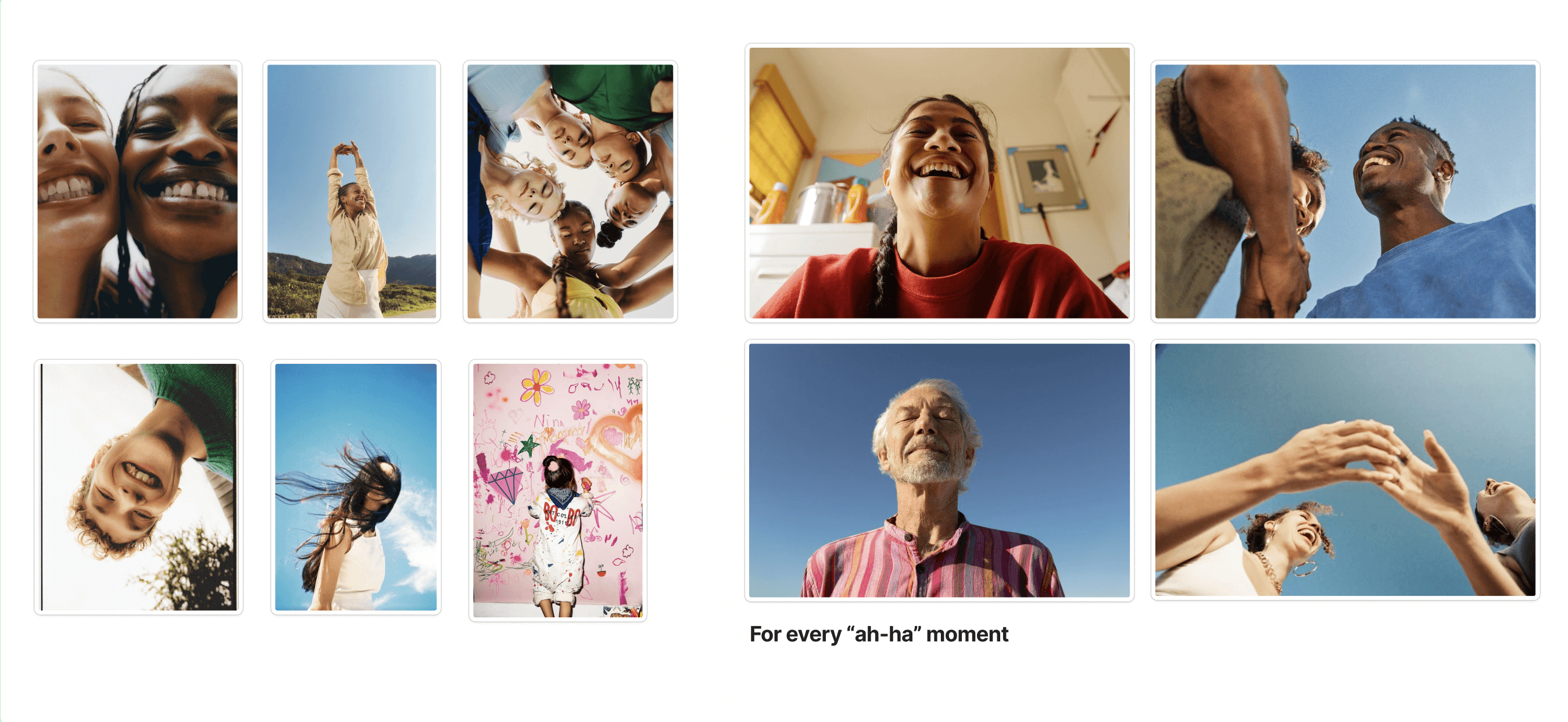
After presenting to leadership, Believe in Your Brain became the new design direction.
When I joined StudyFetch, I was brought on as a Creative Designer with a clear assignment: build the design foundation for a product assembled by a rotation of Fiverr designers, and create something that finally felt cohesive. No design files existed. No shared components. Every screen was its own island.
But within my first weeks of working closely with the founders, they felt something was wrong but couldn't pinpoint it. We spent long sessions trying to name it. I realized visual inconsistency was only the first problem, it was actually a symptom of a brand that lacked identity.
We had two new objectives:
define who StudyFetch is and how it fits into its users' life
define how StudyFetch is communicated, experienced, and perceived.
001
A PERCEPTION GAP WAS BLOCKING OUR TARGET AUDIENCE
StudyFetch was built for college and graduate students, including law and medical students.
But the product's visual tone and naming conventions signaled something very different.
Features like "QuizFetch" and the heavy mascot voice made the product feel closer to a middle‑school study tool than something a law student might trust before finals.
Ironically, students who did try the product loved it. The gamification and personality helped break the monotony of studying.
But many serious students never tried it in the first place.
They discovered StudyFetch through friends, not through the brand itself.
THE PRODUCT
DESIGN FOUNDATION
DESIGN FOUNDATION
With the direction established, my work focused on building the product's structural foundation with our user in mind; with the personality that felt true to StudyFetch's roots, but leading visual direction with clarity, cohesion, and taste.
I first reconstructed the entire product inside Figma, creating the first centralized design files and design system for StudyFetch. The focus was on intuitive flow and cohesion. This established consistent typography, layout patterns, components, and interaction behaviors across mobile and web. The Design team was now alive.
When I joined StudyFetch, I was brought on as a Creative Designer with a clear assignment: build the design foundation for a product assembled by a rotation of Fiverr designers, and create something that finally felt cohesive. No design files existed. No shared components. Every screen was its own island.
But within my first weeks of working closely with the founders, they felt something was wrong but couldn't pinpoint it. We spent long sessions trying to name it. I realized visual inconsistency was only the first problem, it was actually a symptom of a brand that lacked identity.
We had two new objectives:
define who StudyFetch is and how it fits into its users' life
define how StudyFetch is communicated, experienced, and perceived.
The redesign of Spark.E's Customization screen
The redesign of Spark.E's Customization screen
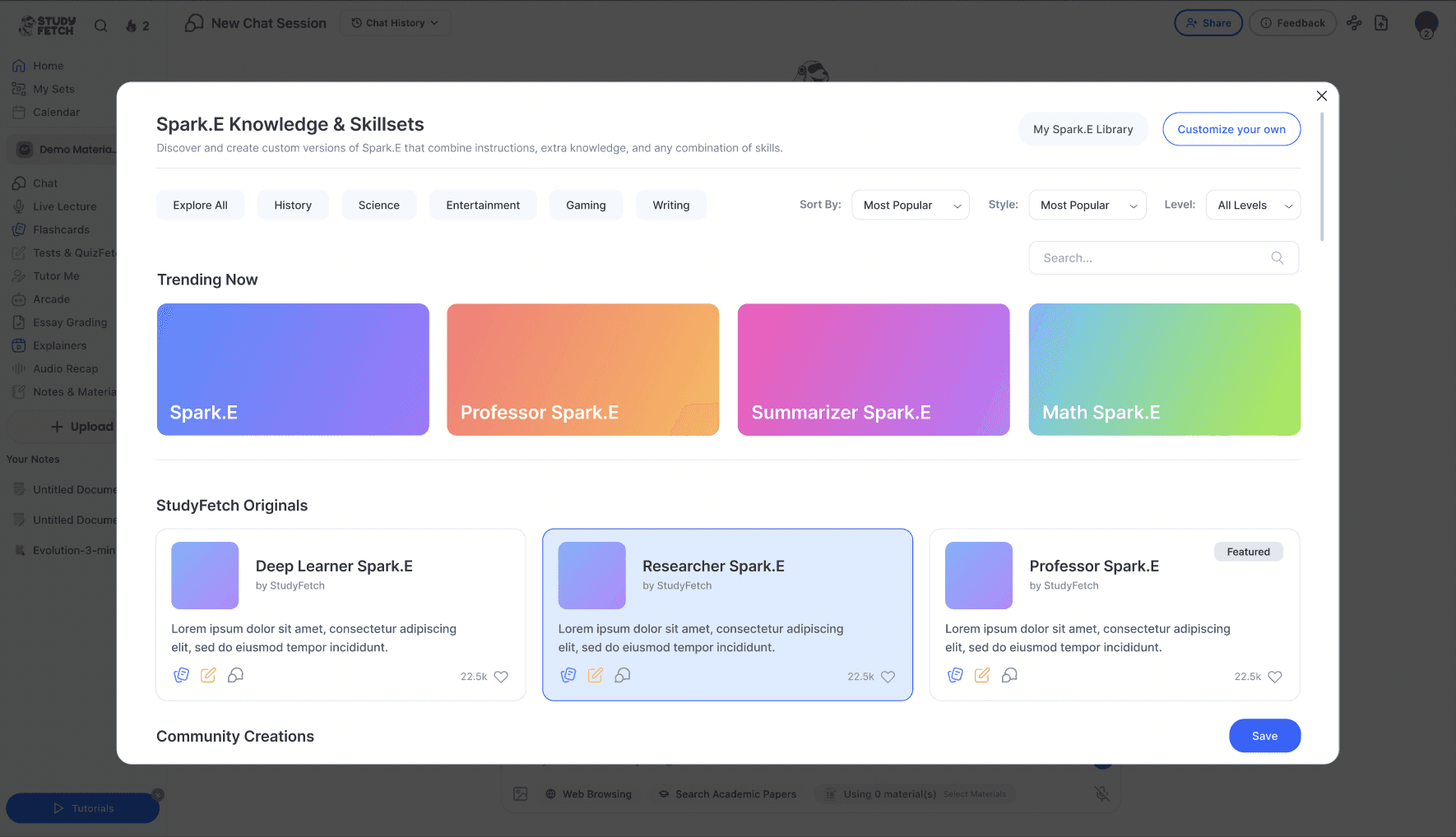
The redesign of the features screens;
a focus on consistency, clear navigation, and polish
The redesign of the features screens;
a focus on consistency, clear navigation, and polish
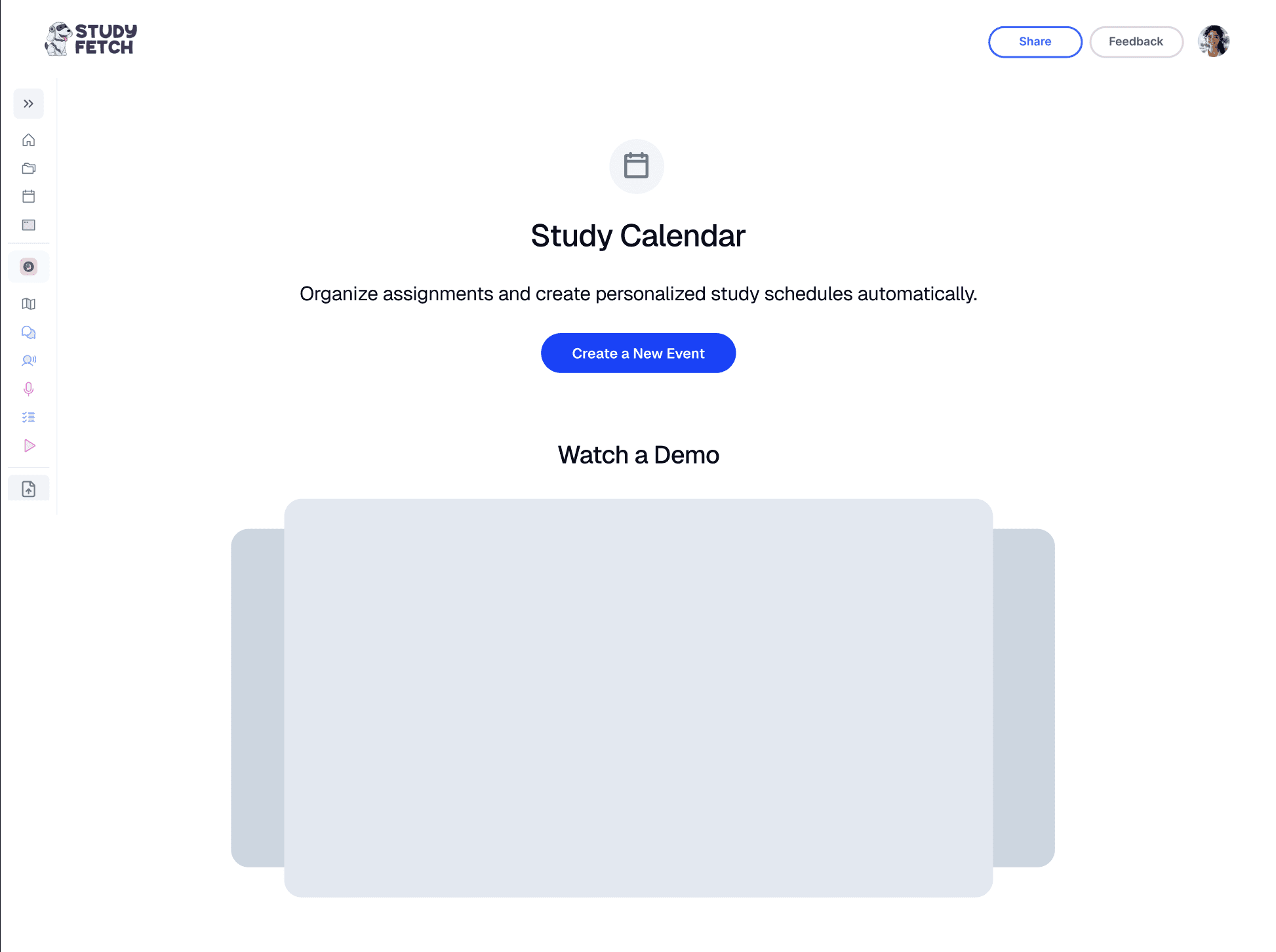
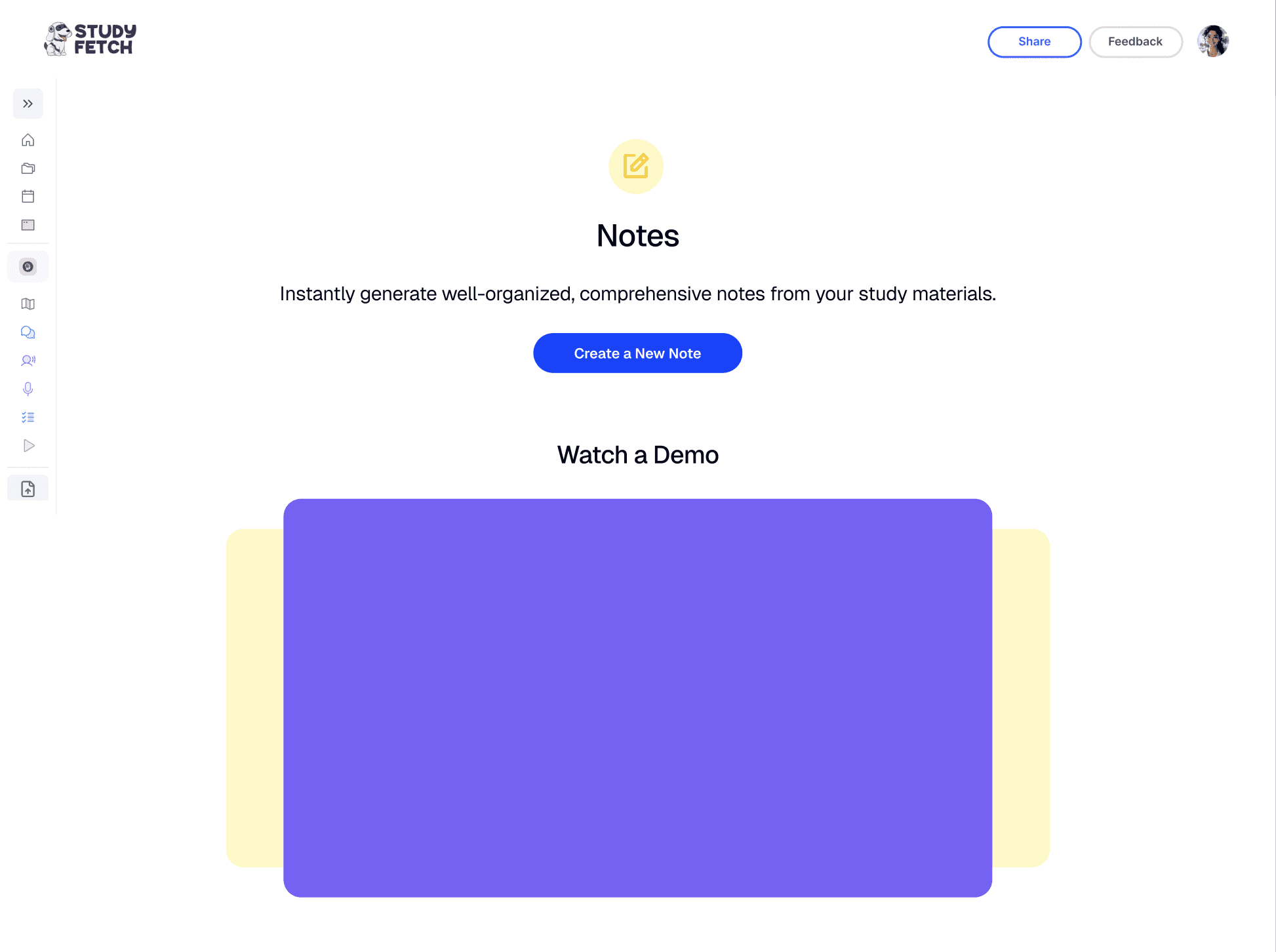
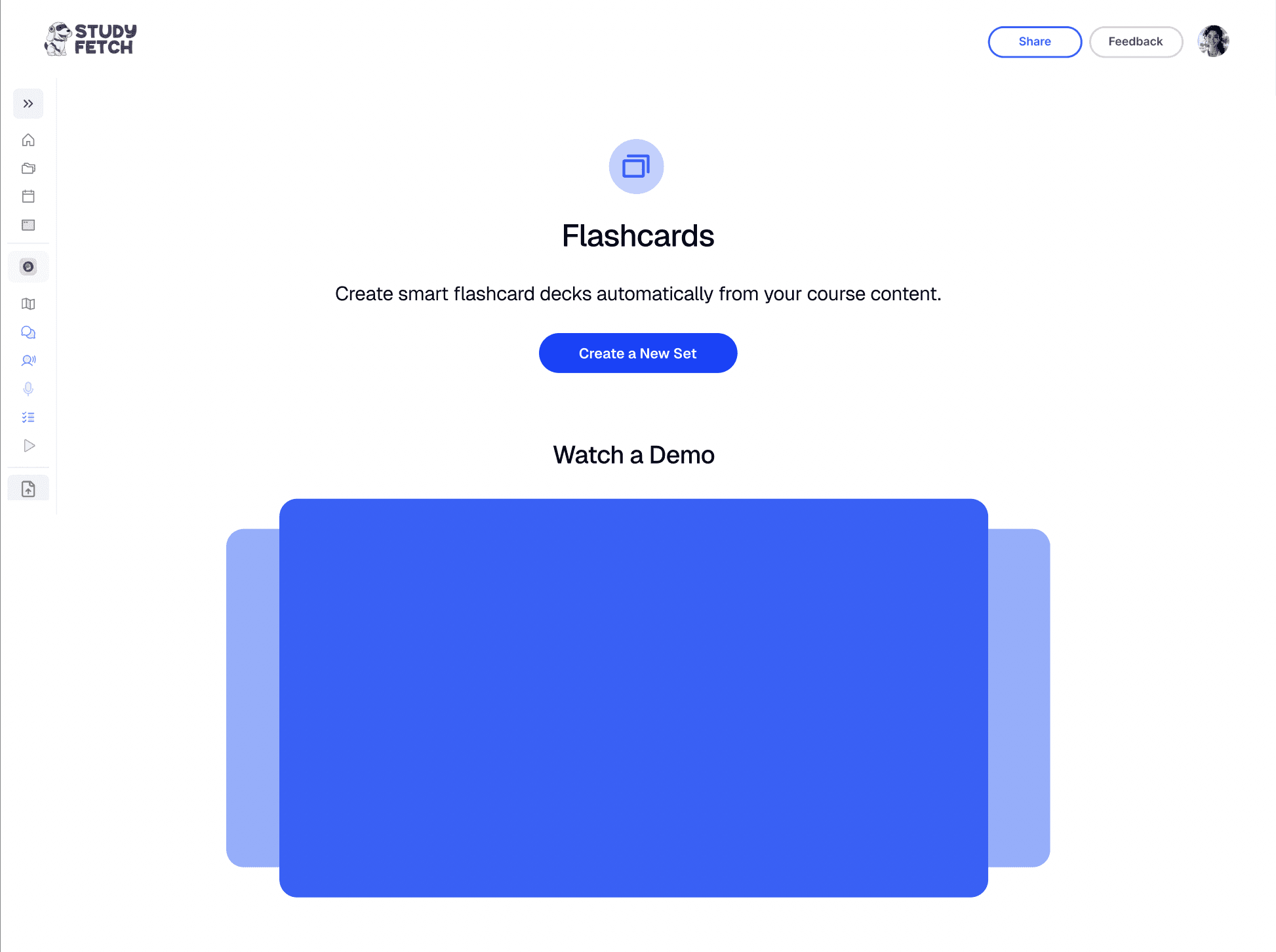
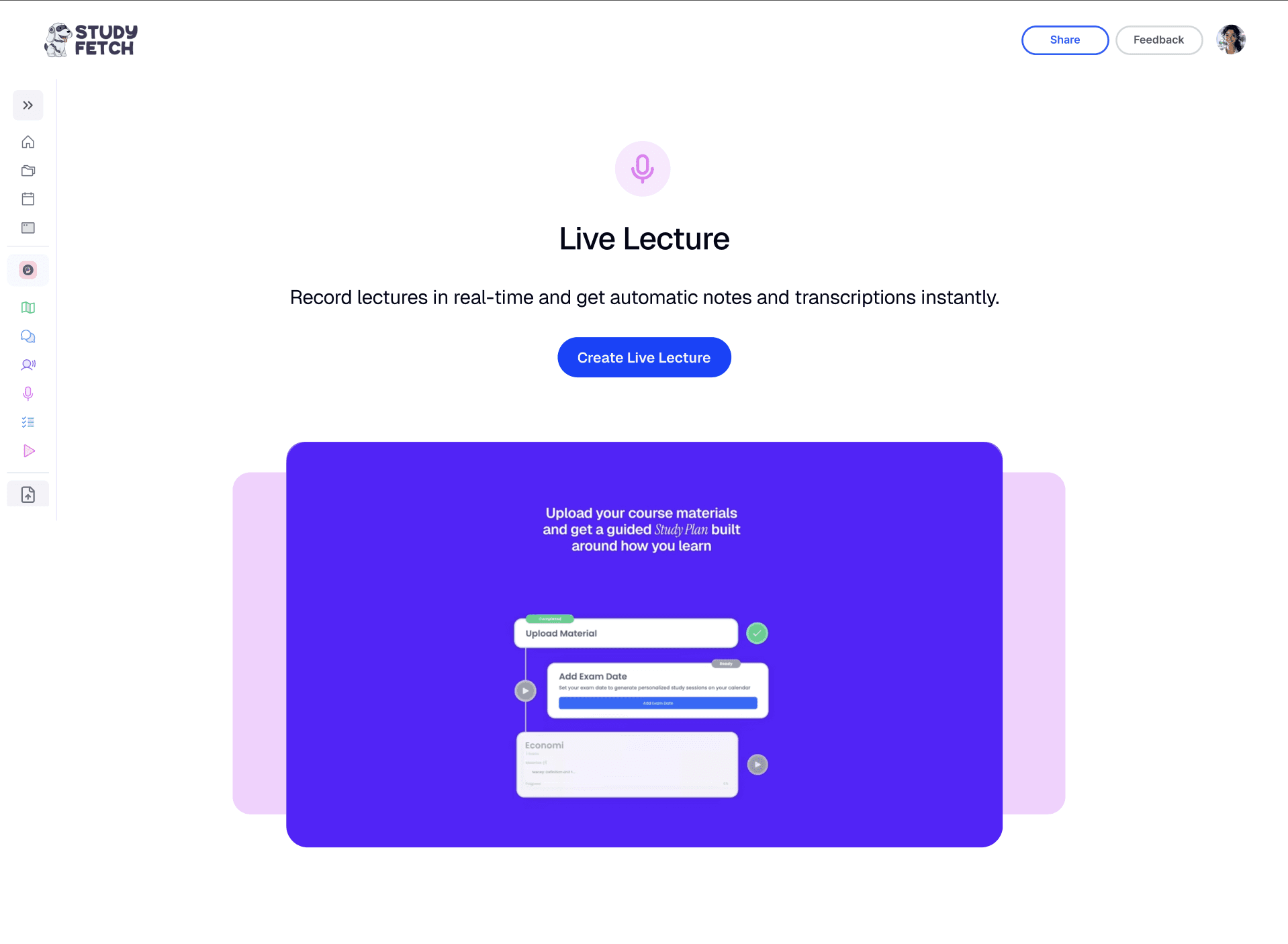
Each feature allowed users to select study materials or prompt topics, to tailor personalized study sets. Since showing every new feature design would be overwhelming, here are some of their launch demos:
AI Study Calendar
AI Tests and Quizzes
AI Flashcards
AI Live Lectures
AI Notes
Each feature allowed users to select study materials or prompt topics, to tailor personalized study sets. Since showing every new feature design would be overwhelming, here are some of their launch demos:
WHAT I LEARNED
Design is felt far before it's able to be articulated.
Thoughtfulness and intentionality leads, taste and resonance follows.
Design systems are a dev team's best friend.